Chinese herb · Skin edition
Bai Ji
白及 Bletilla striata
Profile
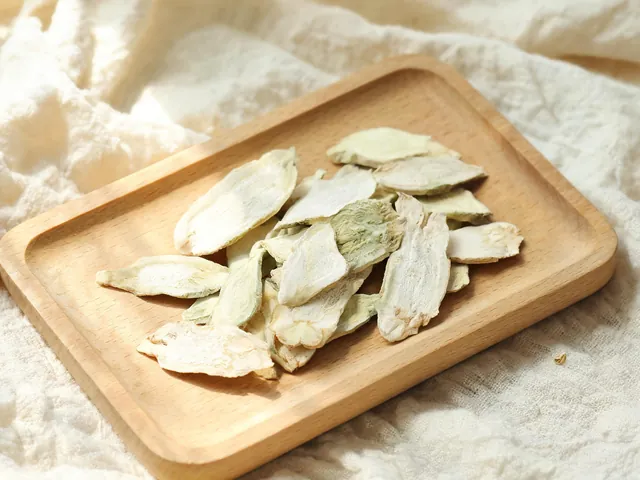
Bai Ji is the sticky tuber that the tradition reaches for when something needs to close. It is cool, bitter and strongly astringent, it enters the Lung, Stomach and Liver, and its classical work is on sores, ulcers and damaged tissue: it stops bleeding, binds a weeping surface and promotes the growth of new tissue.
It is also a face herb, and the record for that is concrete: the Song imperial formulary includes it in a facial preparation built on a group of white herbs. That is a verified classical use rather than a modern claim, and it is one of two reasons the tuber earns a page in this section. The other is safety: its astringency can trap what should be leaving, and it is incompatible with aconite.
Skin signs
- A weeping, eroded or slow-healing patch of skin
- Cracked skin that splits and re-splits
- Acne lesions that have healed badly or are slow to close
- A dry, rough surface with a sticky discharge rather than a clean one
When not to use it
Not in the early stage of an infection or a heat-toxin picture, when the surface is red, hot and spreading: the astringency closes the door on what needs to leave. Not with aconite or its preparations, which is one of the classical incompatibilities. Not internally in the early stage of a cough with un-cleared heat, and not as a self-treatment for bleeding, which needs assessment.
What it does for the skin
The strong astringency is the defining quality. Where a surface is eroded, oozing or slow to close, the tuber is said to bind it and stop the loss. That is why it appears in surgical formulas for non-healing sores and ulcers. The same quality is the danger: used too early on an infected or heat-toxin lesion, it is said to retain the pathogen.
The classical phrase is 生肌, generating flesh, and it is the reason Bai Ji survives in modern wound practice as well as in the old formulas. It is used after the acute stage, once the surface is clean, to help it close. It is not a dressing and it does not replace wound care.
Bai Ji is a classical haemostatic for bleeding from the Lung and Stomach, and topically for a raw oozing surface. Any bleeding that is more than trivial needs medical assessment rather than a herb, and this page does not present it as a first-aid measure.
Verified in the Song imperial formulary, which lists Bai Ji in a facial preparation built on white herbs, alongside Bai Zhi, Bai Zhu, Bai Lian, Bai Fu Zi and Fu Ling. The traditional reasoning is the same binding and repairing quality applied to a dull, slightly rough complexion. It is a historical use and this page does not present it as a cosmetic treatment.
Skin conditions it is used for
| Condition | Pattern | Why it suits | Formula |
|---|---|---|---|
| Skin erosion | A clean but slow-healing surface after the acute stage | The tuber's binding, tissue-building quality is aimed at a surface that has stopped oozing pus but is not closing. It is used after the heat and infection have been dealt with, not during them, and a spreading or painful erosion needs medical care. | Bai Ji powder with Hua Shi in a topical preparation, by a practitioner |
| Cracked skin | Dry, splitting skin with no active infection | An astringent, tissue-binding preparation suits fissures that keep re-splitting, applied to intact but fragile skin rather than to broken infected skin. Dryness itself is a Blood or Yin picture, treated internally. | Bai Ji with Gan Cao in a simple ointment base |
| Acne | Lesions that are healing slowly rather than active inflammation | The classical record pairs it with sores and slow healing, and it is a repairing herb rather than a clearing one. It is not applied to active inflamed acne, which the acne page covers. | Not a stand-alone preparation |
| Keloids | Scar tissue forming on a healing wound | Bai Ji appears in classical scar preparations and in modern laboratory work on scar tissue. That is a laboratory and traditional basis, not a tested treatment, and a keloid needs a dermatology assessment rather than a home preparation. | Not a self-care use |
Combinations
- Gan Cao (6 to 10 g each internally, or in a simple base topically). A soothing pair: Bai Ji binds and repairs the surface, Gan Cao calms the inflammation around it. The pair is used where a surface is both slow-healing and irritable.
- Bai Zhu (6 to 10 g each). Bai Zhu addresses the Spleen generating the dampness that keeps a surface weeping, while Bai Ji binds the surface itself. The pairing is a good example of treating the cause and the manifestation together.
- Mu Dan Pi (6 to 10 g Bai Ji with 6 to 9 g Mu Dan Pi). Mu Dan Pi clears the heat that made the lesion, and Bai Ji closes what it left behind. The order matters: the heat is cleared first, and the binding herb is added once the acute stage has passed.
Formulas
- Bai Ji San 白及散. The name of several historical powders built on the tuber, used topically for sores and bleeding surfaces. The compositions differ between texts, which is why this page describes the tradition rather than a single formula.
- Xian Fang Huo Ming Yin 仙方活命饮. A surgical formula for hot toxic swellings. Bai Ji is not one of its ingredients; it is listed here because the two are often discussed together, and the distinction matters: one clears, the other closes.
Topical use
Bai Ji is applied as a fine powder, a paste or a simple ointment. It is used on a clean surface that is not actively infected, and the astringency means it is stopped as soon as the surface has closed rather than continued as a routine.
- Powder on a clean surface. Apply a thin dusting of fine powder to a clean, non-infected area and cover it lightly. Clean the area and reapply as the practitioner advises. Do not use it on a surface with spreading redness or pus.
- Paste or ointment. Blend the powder with a small amount of water or a plain ointment base and apply a thin layer to cracked but intact skin. Patch test first, and stop if the skin stings or becomes red.
Patch test for 24 hours. Do not apply to infected, spreading or deep wounds, which need medical care. Do not use it with aconite or aconite-containing preparations, and keep it away from the eyes.
Safety
Contraindications
- Early-stage infection or a heat-toxin lesion that is spreading, red and hot. The astringency is said to retain the pathogen.
- Aconite and its preparations (Chuan Wu, Cao Wu, Fu Zi). Bai Ji is one of the classical Eighteen Incompatibilities, and the combination is avoided.
- Internal bleeding or a persistent cough with blood, which needs assessment rather than a herb.
Pregnancy
Not classically listed among the herbs avoided in pregnancy, but it is astringent and binding, and an internal course belongs to a practitioner. A small topical area is a lesser exposure.
Interactions
- Aconite and its derivatives are the classical incompatibility, and the concern is not theoretical: co-administration has been studied for its effect on the absorption of aconitine alkaloids.
- No established interaction with common topical products, but the tuber is strongly astringent and is stopped when the surface has closed.
Allergy
Orchid-family plants are the theoretical cross-reaction, and contact reactions to herbal powders are described. A first use should be a patch test on the forearm, not a full application.
Evidence
Shen Nong Ben Cao Jing (Divine Husbandman's Classic of Materia Medica)
It treats abscesses, malignant sores and gangrenous ulcers; damaged Yin and necrotic flesh; pathogenic Qi in the Stomach; and wind-strike with paralysis.
The oldest entry is about damaged and dying tissue, which is exactly the territory the tuber has occupied ever since.
Ben Cao Feng Yuan (Materia Medica Reaching the Source), Qing
Bai Ji is astringent and binding in nature. It obtains the Qi of autumn Metal, and therefore can enter the Lung to stop bleeding, generate tissue and treat sores.
The clearest statement of why the herb is used where tissue needs to close rather than open.
Chong Qing Tang Sui Bi (Essays from the Chongqing Hall), Qing
Bai Ji is extremely sticky and greatly supplements the Lung. If fire-Heat has not yet been cleared, it should not be used early, because its astringent nature may retain the pathogen.
The classical warning that governs the timing of use, and the reason this page puts the caution before the method.
Sheng Ji Zong Lu, juan 101, facial section (Song, 1111 to 1117)
A facial preparation built on white herbs, listed with Bai Zhi, Bai Zhu, Bai Lian, Bai Fu Zi, Bai Fu Ling and Xi Xin, for facial spots, making the face lustrous.
The verified cosmetic use of this page: Bai Ji appears in the Song imperial facial formulary, not merely in later tradition.
Laboratory work on Bletilla striata polysaccharides and mucilage describes wound-healing and film-forming properties in cell and animal models. That is laboratory evidence, and it supports the traditional use as a mechanistic possibility rather than a demonstrated clinical effect.
No human trial of Bai Ji for a skin condition was found. The page is marked Traditional use, and the laboratory findings are not used to raise it.
Dose
- Internal (practitioner). 3 to 10 g daily, in a formula, for bleeding or a healing defect. Not a home dose.
- Topical. A thin layer of fine powder or paste on a clean, non-infected surface, applied until it closes.
The timing question matters more than the quantity. Bai Ji is used once the acute stage has passed, and its dose is small because its action is binding rather than dramatic. Topically, a thin layer is enough, and it is stopped when the surface has closed rather than continued as maintenance.
Profile note
Bai Ji closes what is open, and that single fact explains both its uses and its dangers. It is a repairing herb with a verified place in the Song facial formulary and a real incompatibility with aconite, and it belongs after the acute stage of any lesion rather than during it.
Sources
- Shen Nong Ben Cao Jing (Divine Husbandman's Classic of Materia Medica), attributed compilation of the Han period - classical entry quoted above.
- Ben Cao Feng Yuan (Materia Medica Reaching the Source), Qing dynasty - classical entry quoted above.
- Chong Qing Tang Sui Bi (Essays from the Chongqing Hall), Qing dynasty - classical entry quoted above.
- Sheng Ji Zong Lu (Imperial Medical Bureau, Song, 1111 to 1117), juan 101, 面体门 - facial formula entry quoted above.
- Pharmacopoeia of the People's Republic of China - source material, preparation and quality requirements for Bai Ji.