Which type is yours?
Raynaud's is read as Qi and Blood failing to reach the fingers and toes. The colour change during an attack, and what triggers it, tell the practitioner why the supply is failing.
Cold invading the Channels (Joints and Muscles)
The classic cold-triggered attack with white then blue digits.
Looks like: Sharp stabbing pain or numbness during an attack; Symptoms triggered by cold exposure
Read about this typeQi and Blood Deficiency
Chronically cold pale digits with fatigue.
Looks like: Not specified
Read about this typeKidney Yang Deficiency
Deep persistent coldness with low back ache and night urination.
Looks like: Not specified
Read about this typeBlood Deficiency with disharmony of Liver and Spleen
Stress-triggered episodes with a mixed deficiency picture.
Looks like: Episodes triggered by emotional stress
Read about this typeQi And Blood Stagnation
Stress-triggered attacks with fixed stabbing pain and dark skin.
Looks like: Fixed stabbing pain in fingers or toes; Dark purplish skin colour
Read about this typeNot sure which? Take the Pattern check
Compare the typesWhere the spots sit, what they look like, the tongue and the main formula
Differentiation turns on three questions. First, what brings an attack on: cold air, cold water, an iced drink, an emotional confrontation, or nothing at all. Second, what the digits do between attacks, whether colour returns within minutes or stays pale, dusky or faintly purple for hours. Third, what the body reports: fatigue, pallor, dizziness, low back ache, night urination and loose stools each point to a different weakness. Five patterns are described and they overlap. Cold invading the channels is the most direct and often the most recent. Qi and Blood deficiency leaves the hands and feet pale even indoors. Kidney Yang deficiency adds a chill that no clothing fixes, with aching low back and knees. Blood deficiency with Liver and Spleen disharmony is the stress picture. Qi and Blood stagnation is the late picture, where pain is fixed and colour no longer clears on warming.
| Pattern | Key signs | Tongue |
|---|---|---|
| Cold invading the Channels (Joints and Muscles) | Sharp stabbing pain or numbness during an attack; Symptoms triggered by cold exposure | Body: Pale, moistCoat: Thin white |
| Qi and Blood Deficiency | Not specified | Body: Pale, possibly thin or with teeth marksCoat: Thin white |
| Kidney Yang Deficiency | Not specified | Body: Pale, puffy and tender with teeth marksCoat: White and wet |
| Blood Deficiency with disharmony of Liver and Spleen | Episodes triggered by emotional stress | Body: Pale and thin, especially at the sidesCoat: Thin white, slightly dry |
| Qi And Blood Stagnation | Fixed stabbing pain in fingers or toes; Dark purplish skin colour | Body: Purple or dark, with stasis spots; sublingual veins dark and distendedCoat: Thin white |
Cold invading the Channels (Joints and Muscles)The classic cold-triggered attack with white then blue digits.
Avoid in pregnancy Caution in pregnancy
The classic cold-triggered attack with white then blue digits.
Cold is the pathogen that starts this pattern. Cold air, cold water or an iced drink reaches the small channels carrying Blood to the fingers and toes and makes them contract, so flow narrows and then stops. Because the digits empty of Blood they blanch white, and as stagnant Blood pools they turn blue-purple, and when warmth relaxes the vessels the returning Blood produces a throbbing flush. The sharp pain and numbness belong to the same process, since constricted channels grip the vessels and the tissue beyond them is briefly starved.
The tongue body is pale, the coating thin and white, and the surface moist, and the pulse feels tight, often wiry, which the classical literature reads as cold constriction and pain. Attacks are set off by cold air, cold water, air conditioning, iced drinks, smoking and emotional stress, and they ease with a heating pad, a warm soak, insulated gloves and warm food such as ginger or cinnamon. Dang Gui Si Ni Tang, built on Dang Gui, Gui Zhi and Xi Xin, is the formula named for warming the channels and dispersing Cold, and needling commonly uses ST-12 Quepen for the upper limbs, ST-36 Zusanli to strengthen Qi and Blood, and SP-6 Sanyinjiao where the toes are affected.
Signs
- Fingers or toes turn white then blue-purple on cold
- Sharp stabbing pain or numbness during an attack
- Affected areas feel icy cold
- Symptoms triggered by cold exposure
Diet and lifestyle for this pattern: Keep your core and extremities warm at all times, with thermal gloves, thick socks and hand warmers as the first line of defence. Soak hands or feet in comfortably warm rather than hot water at the first sign of an attack, eat warming food such as ginger, cinnamon, lamb and walnuts, avoid iced drinks and raw salad, and walk or practise qigong daily so circulation stays active without overtaxing the body.
Qi and Blood DeficiencyChronically cold pale digits with fatigue.
Avoid in pregnancy Caution in pregnancy
Chronically cold pale digits with fatigue.
Here the problem is not a pathogen but a shortage. Qi drives the Blood, and Blood warms and moistens, so when both are thin the periphery is served last. The vessels stay underfilled and the push behind them is weak, which is why the digits stay cold and pale for most of the time rather than only in a cold snap. Numbness and tingling follow the same lack of nourishment, and the general depletion shows as fatigue, a sallow complexion, lightheadedness and a poor appetite.
The tongue is pale, sometimes thin or marked by teeth, its coating thin and white, and the pulse fine and weak with little force. Overwork, missed meals, poor nutrition and emotional strain drain the picture further, while cold exposure makes it obvious. Rest, warm food and gentle exercise such as walking or tai chi rebuild Qi and Blood without burning through them. Ba Zhen Tang, with Dang Gui, Huang Qi and Bai Shao, is the formula named for tonifying both, and the points are ST-36 Zusanli, SP-6 Sanyinjiao and REN-6 Qihai, the last to fortify original Qi so the limbs are warmed from the core.
Signs
- Chronically cold pale fingers and toes
- Persistent fatigue
- Pale or sallow complexion
- Dizziness with poor appetite
- Numbness or tingling in the limbs
Diet and lifestyle for this pattern: Eat warm, nourishing meals such as slow-cooked soups, bone broth, congees and stews with plenty of dark leafy greens, red dates, goji berries and black sesame. Avoid iced drinks, raw salad and excess cold raw food that further cool the body, keep movement gentle such as walking or tai chi, and keep hands and feet warm with gloves and thick socks in cold weather.
Kidney Yang DeficiencyDeep persistent coldness with low back ache and night urination.
Avoid in pregnancy Caution in pregnancy
Deep persistent coldness with low back ache and night urination.
The Kidneys house the body's deepest Yang, the fire that keeps every other organ warm. When that fire is low the extremities, being furthest from the centre, lose heat first and lose it permanently, so the hands and feet are icy even in a warm room and gloves and hot drinks barely help. The same deficiency explains the aching low back and knees and the need to get up at night to pass urine, because the Kidney's warming and holding functions are both weakened.
The tongue looks pale and puffy, tender, marked by teeth, with a wet white coating, and the pulse is deep, slow and weak, most noticeably at the rear position. Cold weather, cold food and drink, overwork, late nights and stress all draw down what remains of the fire. Warmth applied to the lower back, moxibustion, warm cooked food and unhurried exercise restore it. You Gui Wan, with Zhi Fu Zi, Rou Gui and Shu Di Huang, is the deep-warming formula named, and moxa is used on BL-23 Shenshu, DU-4 Mingmen, REN-4 Guanyuan and KI-3 Taixi to warm the Gate of Life and anchor the Yang.
Signs
- Deep coldness in hands and feet that does not warm easily
- Aching low back and knees
- Frequent urination, including at night
- Fatigue with low spirits
Diet and lifestyle for this pattern: Keep the core and lower back warm at all times, and a heated belt or hot water bottle over the kidney area can be especially helpful. Eat warm cooked food such as stews, soups and roasted vegetables with warming spices such as ginger, cinnamon and cloves, avoid iced drinks and raw salads, keep movement gentle, and prioritise sleep and avoid overwork, since rest rebuilds Kidney Yang.
Blood Deficiency with disharmony of Liver and SpleenStress-triggered episodes with a mixed deficiency picture.
Avoid in pregnancy Caution in pregnancy
Stress-triggered episodes with a mixed deficiency picture.
This pattern joins two problems. Emotional strain knots Liver Qi, and Liver Qi is what keeps Blood moving smoothly to the hands and feet; when it is constrained the Blood arrives late and unevenly. Meanwhile the Spleen is not making enough Blood to fill the vessels, so there is less to send in the first place. The result is an attack that arrives with frustration, worry or a difficult conversation rather than with cold, and the digits turn pale or faintly purplish with tingling.
The tongue is pale and thin with especially pale sides and a thin white coat that looks slightly dry, and the pulse is deficient overall, wiry at the left middle position and weak at the right middle. Stress is the main trigger, with cold, overwork, irregular meals and long periods of standing or sitting adding to it. Warmth, relaxation, warm food and enough sleep all help. Xiao Yao San, with Dang Gui, Bai Shao, Chai Hu and Bai Zhu, is the formula named, often modified with Gui Zhi to carry warmth to the extremities, and needling uses LR-3 Taichong, LR-14 Qimen, SP-6 Sanyinjiao and ST-36 Zusanli.
Signs
- Episodes triggered by emotional stress
- Mood swings or irritability
- Pale or sallow complexion
- Numbness or tingling in hands and feet
- Fatigue with loose stools and poor appetite
Diet and lifestyle for this pattern: Eat warm cooked meals rich in blood-building food such as bone broth, dark leafy greens, dates and goji berries, and avoid raw cold food and iced drinks that weaken the Spleen. Manage stress with meditation, deep breathing or gentle movement such as tai chi, and keep hands and feet warm, especially when emotional stress rises.
Qi And Blood StagnationStress-triggered attacks with fixed stabbing pain and dark skin.
Avoid in pregnancy Caution in pregnancy
Stress-triggered attacks with fixed stabbing pain and dark skin.
Long-standing constraint of Liver Qi eventually congeals Blood, and congealed Blood does not move. In the fine vessels supplying the digits the blockage produces pain that is fixed and stabbing rather than vague, and discolouration that is a settled dark purple rather than the blue of a passing attack. Because the obstruction is physical, warmth alone does not clear it, and in severe cases the skin over the affected digits can break down into small ulcers.
The tongue is dark purple with stasis spots and distended sublingual veins, and the pulse is wiry and choppy, which the classical literature reads as obstruction rather than emptiness. Stress, a sedentary routine, cold and heavy greasy food all thicken the stasis, while gentle exercise, massage, warmth and deliberate relaxation loosen it. Xue Fu Zhu Yu Tang, containing Chuan Xiong, Dang Gui and Hong Hua, is the formula named for moving Blood and dispersing stasis, and the points are LI-4 Hegu with LR-3 Taichong as the Four Gates, followed by SP-10 Xuehai and SP-6 Sanyinjiao.
Signs
- Fixed stabbing pain in fingers or toes
- Dark purplish skin colour
- Episodes triggered by emotional stress
- Irritability or mood swings
- Distending chest or rib-side pain
Diet and lifestyle for this pattern: Include warming, blood-moving food such as ginger, turmeric, cinnamon and dark leafy greens. Gentle daily walking or qigong keeps Qi and Blood circulating, prolonged sitting works against it, and stress-reducing practice such as meditation prevents Liver Qi from stagnating.
What you can do
Start with the daily measures that match your type. Herbs and formulas come after these, and only with a practitioner.
- Cold invading the Channels (Joints and Muscles): Keep your core and extremities warm at all times, with thermal gloves, thick socks and hand warmers as the first line of defence. Soak hands or feet in comfortably warm rather than hot water at the first sign of an attack, eat warming food such as ginger, cinnamon, lamb and walnuts, avoid iced drinks and raw salad, and walk or practise qigong daily so circulation stays active without overtaxing the body.
- Qi and Blood Deficiency: Eat warm, nourishing meals such as slow-cooked soups, bone broth, congees and stews with plenty of dark leafy greens, red dates, goji berries and black sesame. Avoid iced drinks, raw salad and excess cold raw food that further cool the body, keep movement gentle such as walking or tai chi, and keep hands and feet warm with gloves and thick socks in cold weather.
- Kidney Yang Deficiency: Keep the core and lower back warm at all times, and a heated belt or hot water bottle over the kidney area can be especially helpful. Eat warm cooked food such as stews, soups and roasted vegetables with warming spices such as ginger, cinnamon and cloves, avoid iced drinks and raw salads, keep movement gentle, and prioritise sleep and avoid overwork, since rest rebuilds Kidney Yang.
- Blood Deficiency with disharmony of Liver and Spleen: Eat warm cooked meals rich in blood-building food such as bone broth, dark leafy greens, dates and goji berries, and avoid raw cold food and iced drinks that weaken the Spleen. Manage stress with meditation, deep breathing or gentle movement such as tai chi, and keep hands and feet warm, especially when emotional stress rises.
- Qi And Blood Stagnation: Include warming, blood-moving food such as ginger, turmeric, cinnamon and dark leafy greens. Gentle daily walking or qigong keeps Qi and Blood circulating, prolonged sitting works against it, and stress-reducing practice such as meditation prevents Liver Qi from stagnating.
Everyday habitsDiet and routine advice for every type
- Avoid introducing more cold: minimise iced drinks, raw food and cold-natured food, and favour warm cooked meals.
- The practical rule is that nothing on the plate should arrive colder than the body. Cooked grains, soups, stews, roasted roots and warming spices, ginger, cinnamon and black pepper among them, carry warmth inward, while iced drinks, raw salad and frozen fruit work against the treatment. A few walnuts in the afternoon, or ginger tea with a little cinnamon, is enough to make a difference, and anyone with a deficiency picture is advised to add moderate amounts of lamb, beef or bone broth. Smoking and caffeine constrict the vessels and are best reduced.
Beauty practices:
What a practitioner might use
Herbs are prescribed to the pattern by a qualified practitioner. Do not self-prescribe.
Avoid in pregnancy Caution in pregnancy
Acupoints 10
Herbs 12
- Dang Gui 当归Caution in pregnancy
- Gui Zhi 桂枝Caution in pregnancy
- Xi Xin 细辛Avoid in pregnancy
- Huang Qi 黄芪Caution in pregnancy
- Bai Shao 白芍Caution in pregnancy
- Zhi Fu Zi 制附子Avoid in pregnancy
- Rou Gui 肉桂Avoid in pregnancy
- Shu Di Huang 熟地黄Caution in pregnancy
- Chai Hu 柴胡Caution in pregnancy
- Bai Zhu 白术
- Chuan Xiong 川芎Avoid in pregnancy
- Hong Hua 红花Avoid in pregnancy
What each one is used for is in the notes below.
Herbs, formulas and acupointsPrinciples, the herbs and points used, and what to expect
Avoid in pregnancy Caution in pregnancy
How the tradition treats raynaud's disease, with the herbs, formulas and points used for it.
Principles
- Warm the channels and dispel cold in the cold-triggered pattern.
- Nourish Qi and Blood, or warm Kidney Yang, where the supply itself is deficient.
- Move Qi and Blood where stress triggers the attacks.
- Protect the extremities from cold and vibration, which both frameworks treat as essential.
- The root and the branch are handled in one formula rather than in sequence. Warming and opening the channels is the branch, which brings relief from attacks, while the root decides the supporting herbs: tonifying Qi and Blood, warming Kidney Yang, soothing Liver Qi or breaking stasis. That is also why the formula changes as the pattern shifts, and why a mixture of deficiency and stasis is treated with a tonic and a blood-moving formula together rather than by choosing one.
Herbs used
Formulas
Acupoints
- ST-12 (Quepen)
- ST-36 (Zusanli)
- SP-6 (Sanyinjiao)Avoid in pregnancy
- qihai-ren-6Avoid in pregnancy
- BL-23 (Shenshu)
- DU-4 (Mingmen)
- guanyuan-ren-4Avoid in pregnancy
- KI-3 (Taixi)
- LR-3 (Taichong)
- LR-14 (Qimen)
- LI-4 (Hegu)Avoid in pregnancy
- SP-10 (Xuehai)
What to expect
- The tradition describes fewer and milder attacks over weeks to months with treatment and cold avoidance.
- Underlying connective tissue disease should be excluded medically.
- Persistent colour change or skin breakdown needs urgent medical assessment.
- Relief arrives in layers. Warmth in the fingers during a session is the first sign that the channels are responding; fewer and shorter attacks follow over the next month or two; and a change in how the body copes with winter is the slowest gain. Setbacks during cold snaps or stressful periods are expected, and the classical literature frames maintenance as seasonal rather than indefinite.
Formulas often used
Safety and when to see a doctor
Seek medical help urgently for
- A finger or toe that turns dark blue or black and does not return to normal colour.
- An open sore or ulcer on the fingertip or toe.
- Rapidly worsening attacks with severe pain.
Avoid in pregnancy
Some herbs and points named on this page carry pregnancy warnings. They are marked where they appear, and each links to its own safety notes.
Cautions
- Keep hands and feet warm; avoid smoking, which worsens vasoconstriction.
- Some medications cause or worsen Raynaud's, so review them with a doctor.
- Underlying autoimmune disease should be investigated.
Using this alongside conventional care
- TCM is described as complementary to conventional care: prescribed vasodilators continue unchanged, and new severe symptoms need medical review.
- Combining is the norm rather than the exception. Calcium channel blockers, alpha blockers and other vasodilators are continued as prescribed, and the practitioner needs the full list because herbs that move Blood, Dang Gui and Chuan Xiong with Hong Hua, can add a mild anticoagulant effect; anyone on warfarin, clopidogrel or aspirin should say so before a formula is chosen. Improvement is the moment to discuss tapering with the prescriber, never to stop suddenly, and pregnancy or breastfeeding should be mentioned early because some warming herbs need extra care.
If you're pregnant
Pregnancy draws on the mother's Blood and Qi, which tends to deepen a deficiency picture and can leave the hands and feet colder and more reactive than before. Treatment has to be cautious. Strong blood-invigorating herbs such as Hong Hua and Chuan Xiong are avoided because of the risk to the pregnancy, and Dang Gui Si Ni Tang is generally set aside because it contains Xi Xin, which is treated as potentially toxic. Gentler warming and nourishing formulas, or dietary warmth from ginger and cinnamon, are preferred, and acupuncture is often the first line, with ST-36 Zusanli used and SP-6 Sanyinjiao left alone in early pregnancy. Care should be shared with an experienced practitioner.
If you're breastfeeding
Most warming herbs, Gui Zhi and Gan Jiang among them, are considered compatible with breastfeeding, but Xi Xin is avoided because of possible toxicity to the infant. Blood-moving herbs, Hong Hua and Chuan Xiong in particular, may cut milk supply or leave the baby restless, so they are used only under close supervision. Nourishing formulas such as Ba Zhen Tang are usually well tolerated and help rebuild the mother's reserves with no risk to the baby. Acupuncture carries no concern about constituents passing into milk and remains the safest option, and the practitioner should always be told that the patient is nursing.
If treating a child
Raynaud's is uncommon in children, and when it appears it is usually cold invasion or an underlying Qi deficiency rather than Kidney Yang deficiency, which is rare at that age. Children do not always describe symptoms well, so parents are asked to watch for colour change and coldness in the fingers on cold exposure, and for pain or distress that follows. Doses are reduced to between a quarter and a half of the adult amount, strong warming and blood-moving herbs are used sparingly, and a modified Gui Zhi Tang is often enough. If acupuncture is tolerated it is brief, shallow and light, and warm mittens and socks matter as much as any prescription.
If treating an elderly patient
In older patients the picture is nearly always one of deep deficiency, most often Kidney Yang, with Qi and Blood empty as well, so treatment is gentle and sustained rather than brisk. Strong warming herbs such as Zhi Fu Zi and Rou Gui are prescribed with care because of their heat and their possible effect on the heart and blood pressure, particularly alongside blood thinners or antihypertensives. Doses usually start at about two thirds of the standard adult amount and timelines are longer, since deficiency takes months to rebuild. Acupuncture helps and should be mild in sensation, and keeping warm, moving gently and resting properly remain central.
Urgent-sign guidance is based on standard sources: NHS anaphylaxis, NHS cellulitis, NHS Stevens-Johnson syndrome, NHS melanoma.
Avoid in pregnancy
For anything severe, sudden or spreading quickly, read when a skin problem needs urgent care.
Understanding
The tradition describes Raynaud's as a failure of Blood and Qi to reach the extremities, with the reason varying from person to person.
The fingers and toes are the farthest outposts of the circulation. When the channels carrying Qi and Blood are healthy, warmth reaches them; when they are blocked or depleted, the digits turn white then blue-purple on cold exposure, with sharp stabbing pain or numbness.
Read more about how Raynaud's disease is understood
Cold invading the channels is the classic trigger pattern: symptoms start with cold exposure and the affected areas feel icy. Qi and Blood deficiency gives chronically cold pale fingers with fatigue, dizziness and poor appetite.
Kidney Yang deficiency gives deep persistent coldness in hands and feet that does not warm easily, with low back aching and night urination. When episodes are triggered by stress, the tradition describes Blood deficiency with disharmony of Liver and Spleen, or Qi and Blood stagnation with fixed stabbing pain and dark purplish skin.
The classical literature also shows that the same vasospasm can begin in two different places. If Cold is the direct cause, an attack follows exposure closely and settles once warmth returns, which tells the practitioner that a pathogen has lodged in the superficial channels. Where the cause is internal, the coldness persists between attacks, the digits stay pale or dusky for hours, and the whole constitution looks underpowered. The distinction matters, because an attack driven from outside is treated by dispersing and warming while an attack generated from within is treated by building and warming, and confusing the two leaves the underlying weakness untouched.
Patterns also sit on top of one another, and the classical literature treats the pattern as a moving target reviewed at each visit rather than a label fixed for life. Someone who began with simple cold sensitivity may develop fixed purplish discolouration and stabbing pain, which means stagnant Blood has been added to the picture. Long-standing stress can deplete Blood while Liver Qi stays constrained, so both have to be addressed in the same prescription. Because these shifts happen slowly, the practitioner looks for them deliberately instead of waiting for the original formula to stop working.
How it connects
Raynaud's disease rarely appears in isolation: the same patterns that cause the vasospasm also generate a cluster of cold and deficiency symptoms. When external Cold invades the channels, it not only triggers the characteristic finger colour changes but leaves a lingering aversion to cold, especially in the limbs, that persists between attacks, reflecting a systemic Yang deficiency or lodged pathogenic Cold that fails to warm the body. When Qi and Blood are both deficient the whole body is undernourished, which frequently leads to anaemia, fatigue and low back pain as the Spleen and Kidneys struggle to produce and circulate Blood; the same empty vessels that cause Raynaud's fail to nourish marrow and muscles. Kidney Yang deficiency is the deeper root, where low back pain, cold limbs and frequent night urination all stem from a failing pilot light. This is why the cluster matters clinically rather than only descriptively: the anaemia, back pain and cold extremities are not separate problems to be managed one at a time, but expressions of the same deficient root. A formula that warms Kidney Yang and builds Qi and Blood can ease the vasospasm and the accompanying pallor, low back ache and night urination together, and the classical literature notes that addressing the shared root is what makes that possible. Cold extremities that persist between attacks are the clearest sign that the root is still untreated.
The conventional viewHow conventional medicine describes and treats Raynaud's disease
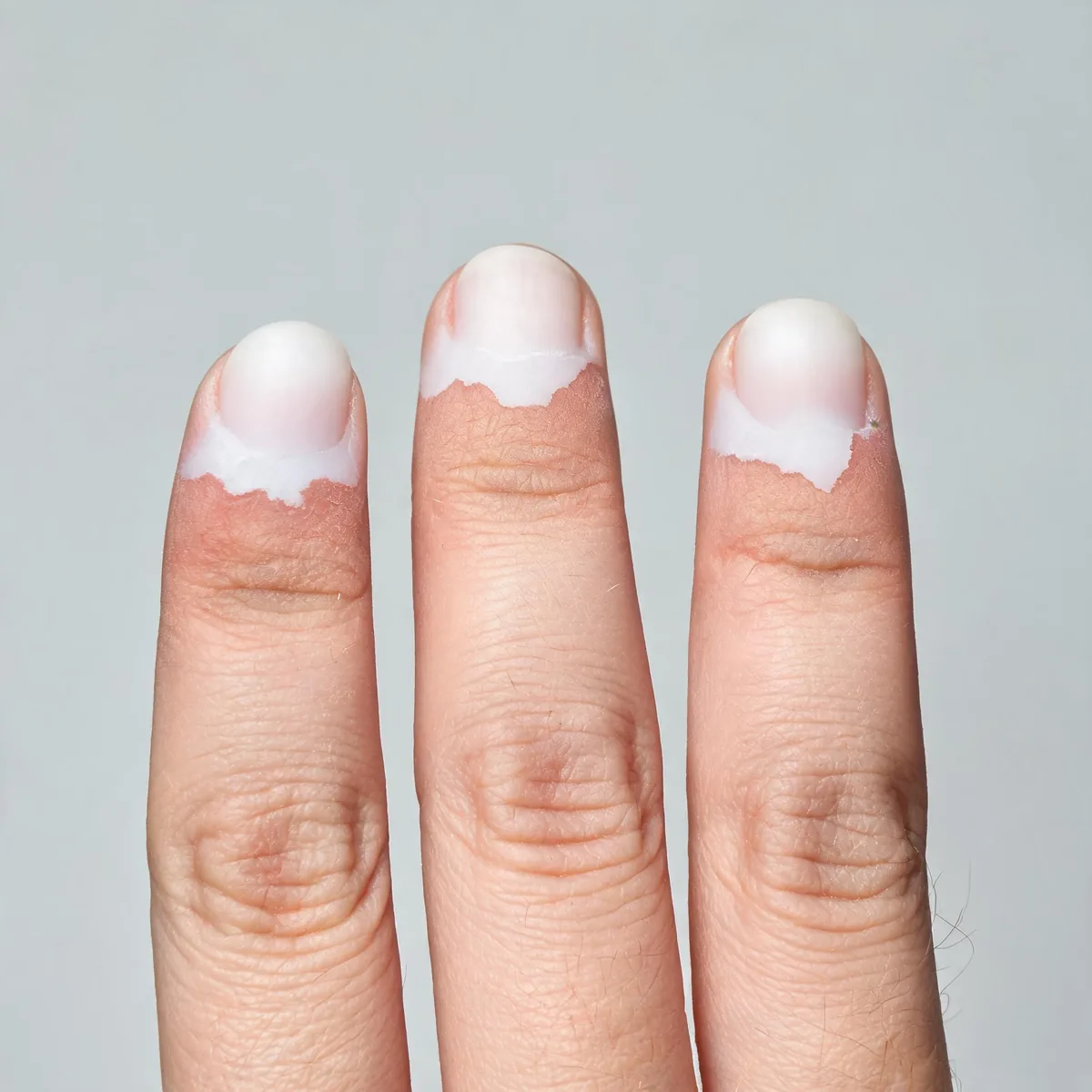
Raynaud's disease is a vasospasm of the small arteries supplying the digits, usually set off by cold or by emotional stress. The vessel narrows, blood flow stops for a time, and the skin passes through white, then blue, and finally red as flow returns, with numbness, cold and pain along the way. Primary Raynaud's stands alone and is generally harmless. Secondary Raynaud's, often called Raynaud's phenomenon, runs alongside autoimmune disease such as scleroderma or lupus and can damage tissue. Diagnosis is clinical, built on the colour sequence and the triggers.
Conventional management starts with behaviour: insulated gloves, hand warmers, avoiding sudden cold and keeping the core warm. When attacks are frequent or severe, calcium channel blockers such as nifedipine or amlodipine are used to relax the vessel wall, with alpha blockers, other vasodilators or topical nitroglycerin as alternatives. In secondary disease the autoimmune condition is treated in its own right, and where ulcers or threatened tissue appear, intravenous prostaglandins or surgery may be needed.
The limitation is that vasodilators suppress the spasm without explaining why one person's vessels overreact and another's do not, and they do not work for everyone; headache, flushing and ankle swelling are common. The same prescription is given whether the attacks follow cold in an otherwise well person or stress in someone depleted and exhausted. TCM is offered as the missing layer, a way of naming and correcting the internal imbalance that leaves the vessels prone to spasm.
Selected PubMed records
Real PubMed records for the conventional discussion above, selected by condition name and title relevance. They are references, not a claim that any treatment is proven for this condition.
- Painful Raynaud's mimics.. Best practice & research. Clinical rheumatology, 2024. PMID: 38704280.
- Raynaud's phenomenon.. Current opinion in rheumatology, 1993. PMID: 8117541.
How it is assessed
The practitioner records the colour sequence during an attack, the triggers, and the constitutional picture.
What a practitioner looks for
What a practitioner looks for
- Colour change: white then blue to red is the classic sequence, and the speed of recovery matters.
- Triggers: cold and vibration suggest cold invasion; emotional stress suggests Liver and Spleen disharmony or stagnation.
- Constitution: fatigue and pallor suggest deficiency; deep cold with low back ache suggests Kidney Yang deficiency.
- Red flags: persistent blue-black digits or skin breakdown need immediate medical care.
No single sign settles the question, so the practitioner builds the picture from several angles at once. The colour sequence is recorded first: digits that blanch white, shift to blue and flush red as warmth returns describe the classic vasospastic attack, and the time taken to recover says something about how deep the Cold or the deficiency goes. The triggers come next, including room temperature, season, cold water, a chilled shop aisle and emotional strain. Then the constitutional questions: energy, appetite, sleep, bowel habit, low back strength and night urination.
The tongue and pulse complete the assessment, and the classical literature is precise about what each pattern produces. A pale body, a thin white coating and a tight pulse point to Cold in the channels. A pale, puffy tongue with tooth marks and a deep, slow, weak pulse, worst at the rear position, points to Kidney Yang deficiency. A pale thin tongue with pale sides and a pulse that is deficient overall, wiry at the left middle and weak at the right middle, points to Blood deficiency with Liver and Spleen disharmony. A dark purple tongue with stasis spots, distended sublingual veins and a choppy pulse points to Blood stagnation. Where tongue and pulse disagree with the story, the practitioner weighs all three and re-examines at the next visit.
Evidence
Evidence status
Compiled for this page from the classical and modern literature; not a systematic review, so treat it as a pointer to sources rather than clinical guidance.
Evidence is modest but growing. Several small Chinese randomised trials report that acupuncture and Chinese herbal medicine reduce the frequency and severity of vasospastic attacks, with measurable improvements in microcirculation. Small Chinese trials have been reported; their quality has not been assessed. Western research remains scarce and larger trials are needed.
What exists is small but consistent. Small Chinese trials have been reported; their quality has not been assessed. The Appiah pilot of 1997, with 33 patients, recorded increased digital blood flow and fewer attacks after acupuncture, which is the clearest single result on the page. Nothing here replaces conventional care in severe or secondary disease, and TCM is described as complementary to conventional care: .
Studies often cited
Context only; related research, not evidence of effect for this page.
Context only; related research, not evidence of effect for this page.
Common questions
Can herbs stop Raynaud attacks?
The tradition describes warming the channels and nourishing Qi and Blood, with fewer and milder attacks over time. It does not promise they stop completely.
Why do my fingers go white then blue?
The classical literature and conventional medicine agree on the sequence of vasospasm: blood flow stops (white), then oxygen depletes (blue), then returns (red and painful).
Is it linked to other diseases?
It can be, particularly connective tissue diseases. That needs medical investigation rather than assumption.
When is it an emergency?
When a digit stays dark and does not recover colour, or an ulcer develops.
What foods should I avoid with Raynaud's?
Cold and raw food is the first thing to cut back, since it is understood to introduce Cold and tighten the vessels further: iced drinks, raw salad and frozen desserts, above all in winter. Caffeine and alcohol disturb circulation in some people. Warming food and spices are the substitute, ginger, cinnamon, cloves, black pepper, lamb and slow-cooked stews among them, and a warm ginger infusion with a little cinnamon is the simplest daily habit.
Does stress really cause Raynaud's attacks?
Yes, and the mechanism is straightforward. Emotional strain knots Liver Qi, and Liver Qi is what keeps Blood flowing smoothly, so when it stalls the fingers and toes, being furthest away, notice first. That is why an attack can arrive in the middle of an argument, or halfway through a tense meeting, with the room perfectly warm. Treatment soothes the Liver, moves Qi and nourishes Blood, often with Xiao Yao San, and many patients find the attacks thin out as the stress response softens.
How long before TCM treatment starts to work?
With weekly acupuncture and a daily formula, the first change is usually noticed in four to six weeks: fewer attacks, milder colour change, or faster recovery once warmth is applied. Patterns that come from straightforward cold invasion, or from depleted Qi and Blood, tend to respond sooner. Kidney Yang deficiency and chronic Blood stasis take longer, commonly three to six months, because deep reserves have to be rebuilt, and the formula is adjusted as the pattern moves.